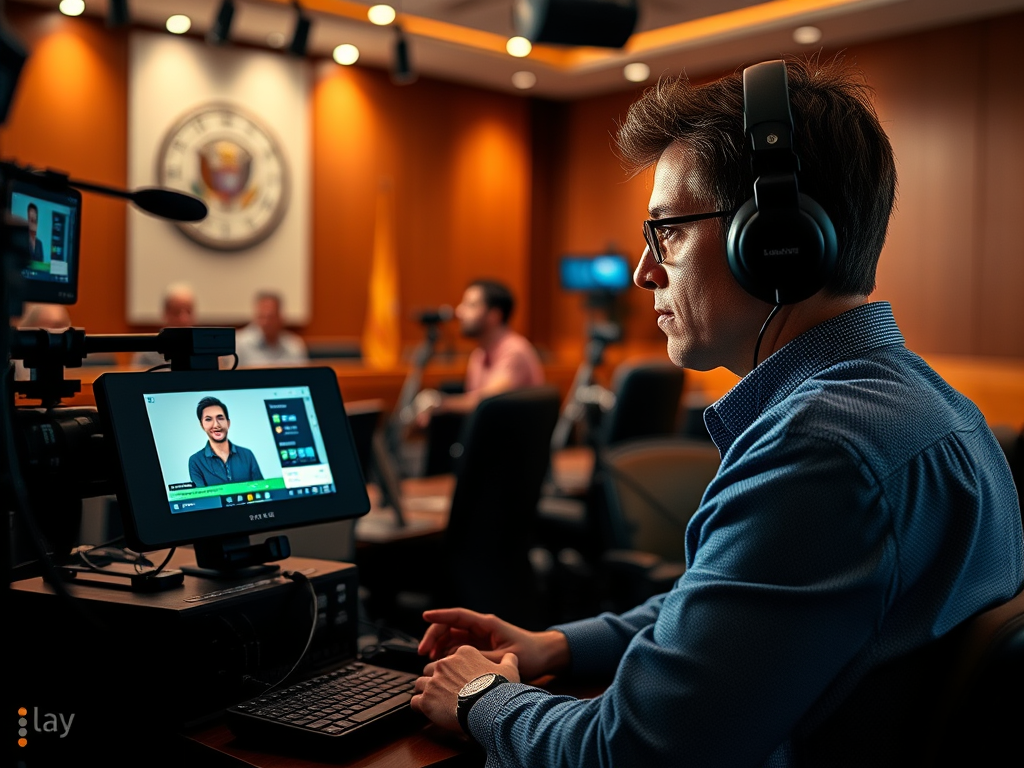
What Are the Benefits of Using a Remote Court Reporter?
Estimated reading time: 5 minutes
- Efficiency: Improves scheduling and reduces delays.
- Cost-effective: Reduces travel expenses and overhead.
- Accessibility: Enhances participation for all parties regardless of location.
- Accuracy: Provides real-time transcription and better record-keeping.
- Collaboration: Facilitates annotation and document sharing.
Table of Contents
- Efficiency and Flexibility
- Cost and Time Savings
- Expanded Access and Accessibility
- Improved Accuracy and Real-Time Capabilities
- Enhanced Collaboration and Communication
- Professional Standards and Trust
- Environmental Benefits
- Considerations for Remote Court Reporting
- Practical Takeaways
- Conclusion
- FAQ
Efficiency and Flexibility
One of the primary advantages of remote court reporting is its ability to improve efficiency and flexibility. By allowing all parties to participate from any remote location, remote reporting minimizes courthouse delays and scheduling conflicts. According to A+ Reporting Service, the elimination of geographical limitations means that hearings and depositions can be arranged more flexibly, thereby speeding up case resolution. Instead of coordinating physical appearances that can often lead to delays, attorneys, witnesses, and clients can engage in the process from wherever they are, significantly reducing wasted time.
Cost and Time Savings
The financial implications of remote court reporting are also substantial. By facilitating remote participation, the need for travel expenses is significantly reduced, which is particularly advantageous in multi-jurisdictional cases where participants might be scattered across states or even countries. Law firms and their clients stand to benefit from tangible savings in overhead by utilizing remote solutions for routine depositions and hearings (source: Verbit). This not only frees up financial resources but also allows legal teams to allocate their time and efforts more strategically where they matter most.
Expanded Access and Accessibility
Remote court reporting enhances accessibility, ensuring that legal proceedings are available to a broader audience. This is crucial for accommodating attorneys, witnesses, or clients who may not have had the opportunity to attend in person due to geographical constraints or health concerns. The ability to participate remotely mitigates potential disparities in access to justice, creating a fairer and more inclusive legal environment (source: A+ Reporting Service).
Improved Accuracy and Real-Time Capabilities
Another compelling advantage of remote court reporting is the potential for improved accuracy and the provision of real-time transcription services. Remote and digital court reporting allows for instant access to drafts of transcripts right on the parties’ devices, which facilitates immediate review of testimony (source: Jili O’Ryan). This streamlined process enhances the likelihood of addressing any issues as they arise, ultimately supporting better outcomes in legal matters. Additionally, digital records generated from remote court reporting are generally more complete and accurate compared to traditional handwritten notes, allowing for more efficient keyword searches during litigation (source: A+ Reporting Service).
Enhanced Collaboration and Communication
Collaboration and communication are greatly facilitated through the use of remote technology. Lawyers and their teams can review and annotate transcripts in real-time, leading to better strategy development and more targeted questioning. This capacity to clarify unclear testimony as it occurs can be invaluable in high-stakes legal situations (source: Jili O’Ryan). Furthermore, remote platforms typically allow for seamless document and exhibit sharing, which not only improves the flow of information but also significantly reduces the time spent on paperwork (source: Verbit).
Professional Standards and Trust
The transition to remote court reporting does not compromise the professional standards expected in the legal field. Court reporters, regardless of their location, ensure the same level of accuracy and integrity in records as they would in person. Their role in supporting legal teams and witnesses remains critical in maintaining trust and clarity throughout the proceedings (source: Brickell Court Reporting).
Environmental Benefits
Adopting remote court reporting solutions has substantial environmental benefits. By reducing paper dependence and minimizing the need for physical document storage, the legal sector can contribute positively to sustainability efforts (source: A+ Reporting Service). The digital documentation processes not only streamline operations but also support eco-friendly practices within law firms.
Considerations for Remote Court Reporting
While there are numerous advantages to remote court reporting, it’s essential to recognize the challenges that may arise. Technical issues such as internet outages or audio/video disruptions can occasionally impede proceedings. Therefore, establishing contingency plans and conducting thorough pre-session technology checks are vital (source: Brickell Court Reporting). Moreover, data security and confidentiality concerns are magnified in a digital environment, necessitating robust protocols to safeguard sensitive information (source: A+ Reporting Service).
Practical Takeaways
For recruiters and HR professionals in the legal sector, understanding the benefits of remote court reporting can empower you to attract top talent and position your organization as a forward-thinking leader in the field. As legal technology continues to advance, take the opportunity to promote your commitment to efficiency, sustainability, and employee well-being through flexible work arrangements.
Actionable Advice:
- Consider providing training on remote tools and technologies to equip your team with the skills needed to excel in this new environment.
- Advocate for a culture that embraces innovation and flexibility, which will help in attracting candidates who value modern and adaptable workplace practices.
- Explore partnerships with providers of remote court reporting services to enhance your firm’s offerings and operational efficiency.
Conclusion
As we navigate the complexities of the legal landscape, embracing innovations like remote court reporting can yield substantial benefits for legal professionals and their clients. From improved efficiency and cost savings to enhanced accessibility and collaboration, the advantages are clear. By integrating these advancements into your practice, you not only streamline operations but also reinforce your commitment to excellence in legal service delivery.
Ready to learn more about how your organization can leverage remote court reporting and other AI-driven workflow automation solutions? Contact us today to discuss how we can support your transition to more efficient legal processes. Our team of experts is here to help you enhance collaboration, improve operational efficiency, and stay ahead in an ever-evolving legal environment.
FAQ
What is remote court reporting?
Remote court reporting involves utilizing technology to conduct court reporting services from a distance, allowing participants to engage remotely.
What are the technical requirements for remote court reporting?
Participants typically require a reliable internet connection, a webcam, and audio capabilities to ensure seamless communication during proceedings.
Is remote court reporting as reliable as in-person reporting?
Yes, remote court reporting can be as reliable as in-person reporting, provided that the proper technology and protocols are in place to maintain accuracy and confidentiality.