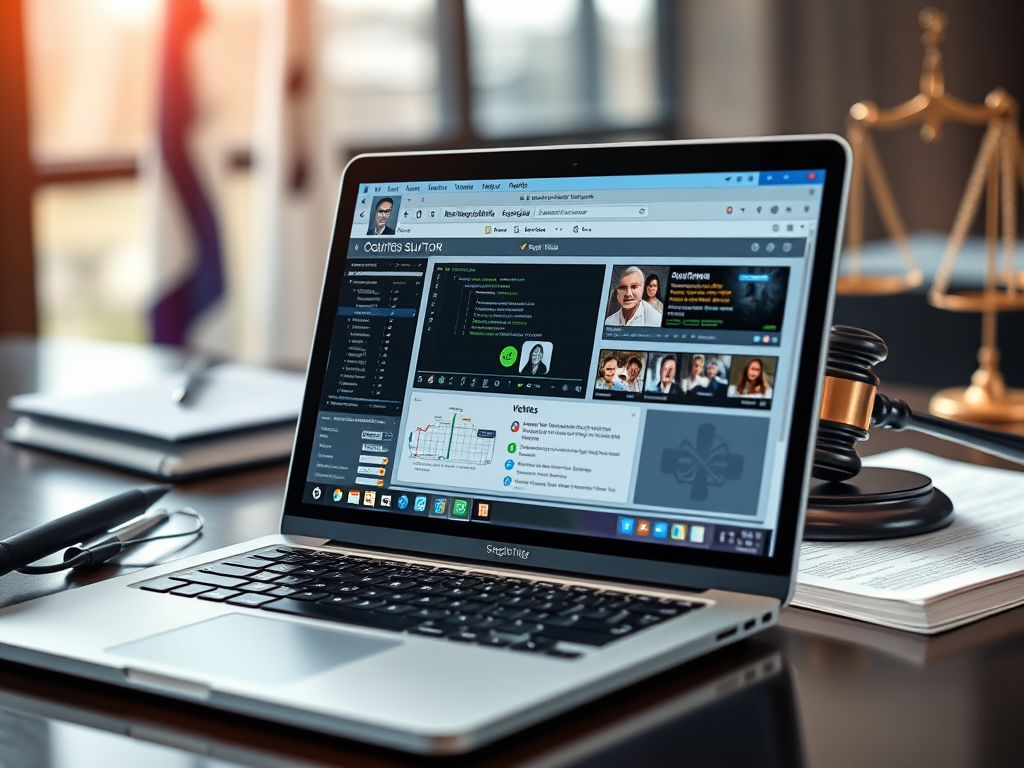
Remote Court Reporting: Revolutionizing the Legal Process
Estimated reading time: 7 minutes
- Convenience: Join from virtually anywhere
- Safety: Ideal during health crises
- Cost-Effectiveness: Reduces travel expenses
- Flexibility: Accommodates different time zones
- Best Practices: Essential for reliability
Table of Contents
- Introduction
- Definition and Overview
- Technology and Platforms
- Advantages
- Best Practices
- Protocols and Legal Requirements
- Comparison: Live vs. Remote Court Reporting
- Summary Table: State Admissibility Rules Example
- Conclusion
- FAQ
Introduction
In the evolving landscape of the legal industry, remote court reporting has emerged as a groundbreaking solution that leverages technology to enhance the efficiency of legal proceedings. This shift not only accommodates the modern demands of legal practice but also maintains the integrity and accuracy of depositions without requiring in-person attendance. This comprehensive blog post explores the definition, technology, advantages, best practices, and legal considerations surrounding remote court reporting, positioning our company as a thought leader in AI consulting and workflow automation in the legal space.
Definition and Overview
Remote court reporting refers to the method by which a court reporter participates in legal proceedings—such as depositions—without being physically present with the witness or other participants. Instead, reporters join these sessions through digital platforms like Zoom, WebEx, GoToMeeting, Google Meet, or Skype. The essential duties of the court reporter, including swearing in witnesses, marking exhibits, reading back testimony, and producing certified transcripts, are seamlessly performed virtually, adhering to the same professional standards as traditional in-person reporting (source).
Technology and Platforms
The effectiveness of remote court reporting heavily relies on specialized software and secure video conferencing platforms equipped with several key features:
- High-Quality Audio and Video Streaming: Ensures that all participants can hear and see each other clearly.
- Secure Document Sharing and Exhibit Annotation: Facilitates the sharing of important evidence in real time.
- Speech-to-Text Real-Time Transcription: Transcribes spoken words into text efficiently during the proceedings.
- Private Waiting Rooms for Participants: Ensures a professional and confidential environment.
- Immediate Rough Draft Transcripts and Unedited Video Available Shortly After the Session Ends: Quickly provides essential materials for further legal action (source).
By incorporating these technological advancements, remote depositions achieve a level of robustness and reliability comparable to in-person sessions, minimizing potential technical issues and maximizing the clarity and accuracy of the legal record (source).
Advantages
The transition to remote court reporting presents several compelling benefits:
- Convenience: Participants can join from virtually anywhere in the world, which dissolves travel time and logistical hurdles (source).
- Safety: Particularly valuable in times of health crises or where physical distancing is a concern, remote reporting allows legal proceedings to continue uninterrupted (source).
- Cost-Effectiveness: The elimination of travel expenses significantly reduces the costs for legal teams and witnesses (source).
- Flexibility: Remote court reporting easily accommodates participants across different time zones and locations, enhancing accessibility for all involved (source).
Best Practices
To ensure effective and reliable remote court reporting, it is essential to follow best practices:
- Integrated Booking of Qualified Digital Court Reporters: Ensure the reporters you use are trained and well-versed in remote processes.
- Use of All-in-One Platforms for Secure Communication: Employ platforms that provide comprehensive tools for communication and document handling.
- Upload and Mark Exhibits in Advance or Real-Time: Being prepared with exhibits enhances the efficiency of proceedings.
- AI-Assisted Live Transcription: Leveraging AI for real-time transcription can improve accuracy and speed.
- Prompt Delivery of Certified Transcripts: After the deposition, ensure that accurate transcripts are delivered in a timely manner, in both digital and hardcopy formats (source).
These practices not only reduce technical issues but also optimize efficiency and uphold the integrity of the legal record throughout the proceedings (source).
Protocols and Legal Requirements
Establishing strong protocols for remote depositions is crucial for maintaining the integrity of the legal process. Remote protocols should include:
- Purpose and Scope of the Deposition: Clearly define what the deposition is addressing.
- Technology Utilization and Service Provider Identification: Specify which technologies and service providers will be used throughout the proceedings.
- Rules Regarding Communication during Breaks: Set clear expectations for communication during breaks and throughout the deposition (source).
The legal admissibility of remote court reporting can vary by jurisdiction. For instance, in Arizona, remote court reporting is permissible but may require stipulation by all parties involved alongside adherence to specific state regulations (source). Consequently, it is imperative to verify local regulations before scheduling any remote reporting.
Comparison: Live vs. Remote Court Reporting
The table below outlines the key differences between live court reporting and remote court reporting:
| Feature | Live Court Reporting | Remote Court Reporting |
|---|---|---|
| Location | In-person | Virtual, via digital platforms |
| Cost | May include travel expenses | Often more cost-effective |
| Convenience | Dependent on travel | High, from any location |
| Safety | Standard | Enhanced during health crises |
| Quality | Standardized | Maintained with proper training |
Both live and remote court reporting maintain high standards of efficiency and quality, although remote options deliver added flexibility and financial savings (source).
Summary Table: State Admissibility Rules Example
| State | Remote Court Reporting Offered | Remote Swearing In | Admissibility Rules |
|---|---|---|---|
| Arizona | Yes | Yes | Requires stipulation of parties |
Note: Rules and regulations can vary between states and may change, emphasizing the need for continual verification (source).
Conclusion
Remote court reporting stands as a versatile, efficient, and safe alternative for conducting legal proceedings. By utilizing advanced technology, this method assures the preservation of accuracy and integrity in legal records while offering significant convenience and cost savings. Emphasizing adherence to best practices and local legal requirements ensures that remote court reporting remains a dependable option alongside traditional methods (source, source, source).
As the legal landscape continues to embrace innovative solutions, we invite recruiters and HR professionals to explore how our AI consulting and workflow automation services can enhance processes within their firms. For more information, please contact us today and discover how we can support your remote court reporting needs!
FAQ
What is remote court reporting?
Remote court reporting is the participation of court reporters in legal proceedings using digital platforms rather than being physically present.
What are the advantages of remote court reporting?
Advantages include convenience, safety, cost-effectiveness, and flexibility for participants.
What technology is needed for remote court reporting?
High-quality audio and video streaming, secure document sharing, and AI-assisted transcription are key technologies.
Are remote court reports admissible in court?
Yes, but admissibility varies by jurisdiction, and specific rules may need to be followed.
What are best practices for remote court reporting?
Best practices include using qualified reporters, secure platforms, and ensuring prompt delivery of transcripts.